
Root Canal Therapy
Root Canal Therapy
 When decay in a tooth is left untreated, the bacteria causing the decay will eventually reach the nerve in the centre of the tooth and infect it. An infected tooth nerve can be extremely painful. After the infection has killed the tooth nerve, the pain momentarily disappears. It is not unusual for patients to be able to tell us the exact time the tooth nerve died, as the pain goes from 9/10 to almost nothing. The infection then continues to spread into the jaw bone, with a slowly increasing debilitating pain.
Antibiotics will provide short term relief, but are ineffective in treating the infection as the infected tooth becomes a constant seed of infection into the jaw bone.
Left untreated an infected tooth can result in a severe facial swelling and sometimes hospitalization.
To treat the infection, the bacteria inside the tooth need to be washed out and the tooth filled with antibiotics to disinfect the area. Once the body has shown signs of healing, the antibiotic dressing is removed and the tooth root canal is sealed to prevent reinfection. This process can take between 2-3 appointments. Although root canal can be performed in a single appointment, the chance of reinfection is greater.
 A dental crown wraps up a tooth to protect it from cracking or splitting in much the same way as a phone case prevents a dropped phone from cracking. A dental crown is a good solution to strengthen a tooth, when 50% or more of the tooth structure has already been lost. They can also be used to hold together a tooth, which has already badly cracked. Dental crowns are a great way to restore a tooth to a beautiful natural look and feel.
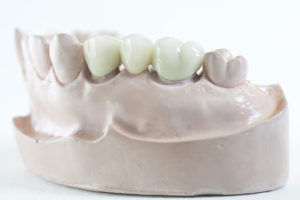 A dental bridge is a simple and fast way to replace a missing tooth, which looks completely natural. A dental bridge is made to give teeth back their natural look and feel without an unsightly gap, or to give back more teeth to chew on.
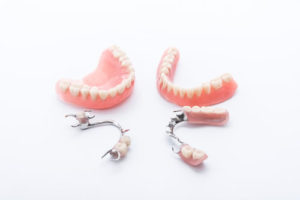 Dentures are an easy way to quickly and economically replace multiple missing teeth. Modern dentures are more comfortable and natural looking than those of your grandparents.
 We would all love to be able to grow new teeth. The only problem is it takes our bodies about 6 years to grow our first adult teeth. Dental implants look and feel like a natural tooth and can truly change the way people live. Dental implants can give people back the confidence to eat, laugh, speak and enjoy life. If you have gap in your smile, or an unreliable denture, it might be the solution for you.